Conservation milestone underlines importance of protecting wildlife genetics
A significant step in the fight against extinction has been reached by two UK conservation organisations following the preservation of genetic material from the 400th species in Nature's SAFE's wildlife biobank.
A significant step in the fight against extinction has been reached by two UK conservation organisations following the preservation of genetic material from the 400th species in Nature’s SAFE’s wildlife biobank.
One of the species contributing to this milestone is the Critically Endangered western lowland gorilla. Genetic material from Jock, Bristol Zoo Project‘s former silverback, has been preserved following his death, ensuring his valuable genetic contribution remains available to support future conservation efforts.
Western lowland gorillas are Critically Endangered and inhabit some of the most dense and remote rainforests in Africa. Their numbers have declined by more than 60% over the last 20 to 25 years and, even in the best-case scenario with current threats removed, scientists estimate the population would take around 75 years to recover.
Throughout his life, Jock made an important contribution to the European Association of Zoos and Aquaria’s Ex-situ Programme (EEP), helping to maintain the genetic diversity of the European population through successful breeding.
Brian Zimmerman, Director of Conservation and Science at Bristol Zoological Society, said:
“Modern conservation demands that we use every approach at our disposal. Biobanking gives us the opportunity to preserve valuable genetic material that might otherwise be lost, ensuring future conservationists have more options to maintain healthy, resilient populations. Together with conservation breeding and protecting species in the wild, it strengthens our ability to help secure the future of threatened wildlife.”
By preserving living cells and genetic material today, organisations like Nature’s SAFE are creating a long-term safety net for species threatened by habitat loss, climate change, disease, and human-wildlife conflict.
Terri Hill, Vice Chair of the charity, comments:
“‘Reaching representation of genetics from 400 species in our living biobank is an important conservation milestone. That this was from Jock, the oldest male gorilla in the UK, makes it especially meaningful. As an iconic ambassador for his species, Jock has helped inspire generations of people to care about wildlife.
Although Jock has passed, it is of real comfort to know that, in a sense, part of him lives on in our tanks.
By cryopreserving his reproductive and somatic cells, we are safeguarding a unique and valuable genetic legacy that could one day support advanced reproductive technologies and strengthen the long-term resilience of Western lowland gorilla populations”
The charity emphasises that biobanking is not a replacement for protecting animals in the wild, but rather a vital complement. Bristol Zoological Society is pushing forward this integrated approach to conservation. Alongside its participation in the EEP, the Society works in Monte Alen National Park in Equatorial Guinea, supporting local communities to coexist with wildlife, including the region’s critically important gorilla populations.
Nature’s SAFE is one of Europe’s only dedicated wildlife cryobanks, working to save animals from extinction by preserving genetic material from threatened species worldwide. The charity now partners with over 100 zoos and aquaria across the UK, offering free cryopreservation services to support conservation breeding, research, and future restoration efforts.
As pressures on wildlife continue to grow, genetic rescue will become essential for the survival of many species. For species on the brink, preserving their genetic future today could make all the difference tomorrow.
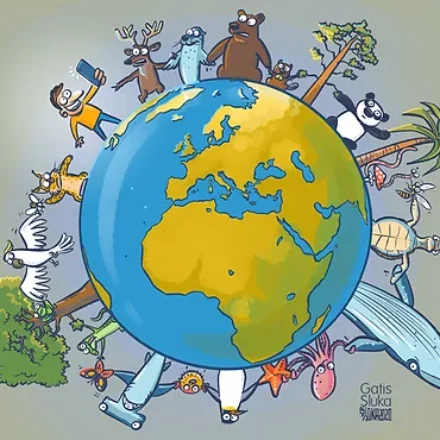
Nature’s SAFE, Europe’s first living biobank for endangered animals dedicated to halting the catastrophic decline in global biodiversity, is pleased to announce that it is joining the Global Coalition #UnitedforBiodiversity, initiative of the European Commission.
Nature’s SAFE, the conservation charity on a mission to Save Animals From Extinction, is expanding its collaborative network having formed an exciting new partnership with Shepreth Wildlife Park.
We use cookies to optimise our website and our service.
Functional
Always active
The technical storage or access is strictly necessary for the legitimate purpose of enabling the use of a specific service explicitly requested by the subscriber or user, or for the sole purpose of carrying out the transmission of a communication over an electronic communications network.
Preferences
The technical storage or access is necessary for the legitimate purpose of storing preferences that are not requested by the subscriber or user.
Statistics
The technical storage or access that is used exclusively for statistical purposes.The technical storage or access that is used exclusively for anonymous statistical purposes. Without a subpoena, voluntary compliance on the part of your Internet Service Provider, or additional records from a third party, information stored or retrieved for this purpose alone cannot usually be used to identify you.
Marketing
The technical storage or access is required to create user profiles to send advertising, or to track the user on a website or across several websites for similar marketing purposes.